Thursday, 13 August 2015

2015 Internation Youth Day Speech by Dr. Ahmed Adamu

Make Civic Education A Number One Priority - Ahmed Adamu

As the world celebrate the 2015 International Youth Day, the Chairperson of the Commonwealth Youth council, Ahmed Adamu, a Nigerian, has tasked youth leaders around the world to make civic education a number one priority.

In his address to youths across the world, Adamu said Civic Education can be formal or informal, and should be geared toward making young people productive citizens. Th theme for this year’s youth day theme is “Youth Civic Engagement”.

“Today is the 2015 international Youth Day, and like every year on 12th of August, the world celebrate and reflect on the role of young people in sustainable development, and also discuss about issues that concern them” he said.

This theme is very important for us, the young people, as the world population is becoming younger in every generation, the participation of more young people in nation building and citizenship awareness is imperative. In the wake of youth apathy in political and civic life, this day will open discussions and debate on how to ensure improved youth civic mindedness, voter turnout, confidence in government institutions and democracy as well as knowledge of history and civic rights.

There are still some young people out there who do not care about the values of democracy, human rights and justice, and we have to discuss why and how we can provide civic education to these young people. The young people would have to lead in addressing our own issues, and I tasked all the youth leaders around the world to make civic education a number one priority in their programmes.
Civic Education can be formal or informal, and should be geared toward making young people productive citizens, and educating them on how to live and contribute to the modern society. The young people in the Commonwealth have debated a possible link between extremist ideology and civic education, and agreed that youth participation in decision making at all levels and civic education contributes to better development outcomes and peacefulness of our societies.

He said one of the key priorities of the Commonwealth Youth Council is youth participation in democracy and governance.

To ensure proper civic engagement and participation of young people, the government must take measures and provide adequate resources toward civic education especially in rural communities. As the world is about to enact new global policy priorities, youth civic engagement and participation should be accorded an utmost priority.

“In our effort to ensure active youth civic engagement in the Commonwealth, the themes for the 2015 Commonwealth Youth Forum to be held in Malta are centred around civic engagement of the young people, and these bordered around Participation of young people in Economic, Social, political and environmental sustainability in their societies. We call on young people in the Commonwealth to actively contribute to discussion on these agendas and come up with decisive recommendations for the heads of governments’ consideration in the 2015 CHOGM.”

He also revealed that the Commonwealth Youth Council is also celebrating the young people who are doing excellent jobs in ensuring youth civic engagement through a book publication titled “Commonwealth Young Achievers Book”.

“We have so far received wonderful profiles of active young people and the book will be published soon. It will serve as the monument and celebration of the great job young people are doing in civic engagements around the Commonwealth, so as to encourage and inspire other young people” Adamu said.


https://www.naij.com/516314-international-youth-day-read-commonwealth-youth-council-said.html

Monday, 27 July 2015

Ahmed Adamu – First Nigerian C/Wealth Youth Chair

Dr. Ahmed Adamu – First Nigerian C/Wealth Youth Chair

|      
  
Ahmed Adamu is a Nigerian living in diaspora who has achieved so much as a youth. A graduate of Bayero University, Kano, he was elected as the financial secretary of the Student Union Government (SUG) of the university, and afterwards nominated as the national president of the National Association of Katsina State Students (NAKATSS).

In 2007, he started a non-profit organisation called League for Democratic Youths. The organisation empowers young people and gives them skills in leadership to educate them on their democratic rights. “We created that to raise awareness on the role of young people in a democratic system and how to checkmate the government, especially in terms of budget tracking and other matters. It was as a result of that movement that I was nominated to represent Katsina senatorial district at the Nigerian Youth Parliament as the Chief Whip,” he told LEADERSHIP Weekend.

As soon as he completed his work at the Youth Parliament, he was nominated to represent Nigeria at the Commonwealth Youth Forum which is made up of 53 countries. That was Ahmed’s first contact with activities of the Commonwealth. In 2011, he was invited to Australia to represent Nigeria at an annual meeting of the council’s member countries’ Heads of State.

It was at the 2011 meeting that Adamu was fortunate to be nominated to meet Her Majesty, the Queen of England, on behalf of the young people in the Commonwealth, in order to present her with the communique of their meeting. It was a meeting held to discuss, among other things, problems and issues affecting youths and proffer recommendations and solutions, which were then presented to the heads of government, to serve as input to their discussion and their resolutions, in line with what young people want.

“My meeting with the Queen was an encouragement for me to continue with the Commonwealth Youth Council even though I had so much going on for me prior to being introduced to the Commonwealth affairs,” he enthused.

When nominations were being conducted to elect a chairperson for the Commonwealth Youth Council in an open nomination style held in Sri Lanka, Ahmed was at the time working on his PhD in London. Still, he seized the opportunity to run for the position. The Commonwealth Youth Council has six member continents and geopolitical zones. With its ‘turn taking,’ structure, the chairperson’s role was open to Africa and Europe at the time. Adamu was eventually nominated to represent the African geopolitical zone. Contestants were 40 in number, and screened down to four.
Adamu performed excellently during the debate and after the polls, he emerged the first ever black African to be the chairperson of the Commonwealth Youth Council.

“Several countries were very happy that we now had a Commonwealth Youth Council and they wanted to see us; to celebrate us, especially African countries. It is a very good achievement for Africa and Nigeria,” he said.

Interestingly, the role of chairperson of the Commonwealth Youth Council may not come back to Africa until after eight years because of its rotational structure; and if it does come in the next 8 years to Africa, it might not be to a Nigeria, but another country in Africa, or Europe, hence the reason why the golden opportunity should be celebrated. The Commonwealth Youth Council currently has over 1.2 billion young people from 53 Commonwealth countries spanning over the 6 continents.

When asked what it feels like to be the chairperson of the Commonwealth Youth Council, Adamu stated, “I deal with the entire Commonwealth. It’s a Herculean task because my background is African. I may not know what the youth background is in Asia, the Caribbean, the Pacific, but I will still have to respond to their wishes and to their comments and to the things that they want. It is a very diverse and a very complex task,” he told LEADERSHIP Weekend.

“If I succeed in this position the world will say a Nigerian has succeeded. Nobody would remember my name. They will say it was a Nigerian who became the first chairperson of the Commonwealth Youth Council and he did well; and if I fail, they will say it was a Nigerian; and that may negatively affect the country because if someone aspires to take an international position such as this in the future, people would say, ‘is it a Nigerian? No, do not give him the opportunity because there was once a Nigerian in this position and he failed.’ So I am an ambassador; I am an image maker for the country, and if there is any country that should support our cause, it should be Nigeria,” he said.
Adamu, in his capacity as chairperson of CYC, is expected to serve a two-year term until the next General Assembly of the council, which will take place at the end of this year. Adamu, a thoroughly inspiring youth, is also a university lecturer and intends to return to teaching soon.

The Commonwealth Youth Council under the leadership of Adamu has launched projects such as, ‘Youth Campaign Against Election Violence, Young Achiever’s Documentary, music competitions for songs that promise peace and so on.

http://leadership.ng/features/449811/ahmed-adamu-first-nigerian-cwealth-youth-chair

Friday, 3 July 2015

Tkbesh! Exclusive Interview With Ahmed Adamu: Chairperson Of Commonwealth Youth Council (CYC)

Major quotes from the interview

"The Nigerian politics is one of the most expensive in the world. As a university lecturer, how long would it take me to save up to N5 million to sponsor my campaign, you already know that even that amount is considered too small, as I was told people spend up to N50 million to become members of house of representatives. Now, delegates usually vote for the person that bid higher. They don’t look at competency most times. That is why we recommend slashing out of the monetary attractions to these leadership positions, so that people who are attracted by the monetary benefit attached to it will vanish, and only the serious minded politicians will stay.”

“I can see many Nigerians are desperate about politics and positions, and I found that disgusting. People do not have to be desperate for power. You don’t necessarily need it to be a leader. And if you deserve it, you do not have to be desperate to get it.”

“Success is not measured by the digits in your bank account, or by the number of houses or cars you possesses, these are delusions. Success is measured by the number of lives you are able to touch, in terms of inspiring and making them better. “

The full interview:

Youths play an important role in the Commonwealth. They have a voice in how their countries and the wide Commonwealth are run. A voice which is formed through young people working as an international network of their countries and helping to shape the development of the those countries today for the future and generations to come. This is one young and intelligent Nigerian, doing us proud! Ahmed Adamu, the current Chairperson of CYC and of course an inspirational leader to many.

He was a member of the Katsina State Executive Council Committee on Youth Restiveness and Unemployment; and also the secretary of the Constitutional Review Committee, Katsina Central Constituency in 2012. He is also the founder and pioneer president of Youth Participation for Progressive Development Initiative.

As the Commonwealth Youth Council Chairperson, he is expected to serve a two-year term until the next Council’s General Assembly, which will take place end of this year 2015. In this Interview, Tkbesh! takes the current chairperson of the commonwealth youth council down the memory lane and his plan for the future.

Tkbesh! When you were declared winner after beating other contestants from many countries, how did that make you feel. Were you expecting that result?

AHMED: My friends were so optimistic that I will win, I knew I put so much efforts more than all other contestants, and I knew I performed very well during the debate, and I met with all the delegates one on one, but still I was a bit unsure that the result could go otherwise, until when my name was announced as the winner with landslide. So, it did not come to me with so much surprise. Many delegates promised me their votes even before we went to Sri Lanka for the election. Even though I enjoyed more support from other continents, I still appreciate my African friends who stood by me to make sure that I emerged the winner. I started my campaign two months to the elections, but those were very long months as serious phone calls, skype calls, travelling, and emails were made. So much anxiety, that I could not concentrate on food. So, I think I wanted it most.

Tkbesh! We have no doubt you do! If memory serves right, the formation of the Council was endorsed by Commonwealth Heads of Government in Perth, Australia, in 2011. Tell us how you got involved in the first instance.

AHMED: My first engagement with the commonwealth youth activities was when I was nominated to represent Nigeria at 2011 Commonwealth Youth Forum in Australia, that is where I met inspiring colleagues, and I felt challenged that young people can really do more. In that meeting I was more of an observer as I did not play active role, because I am a new comer on the board, I was not noticeable. Usually, that is how I am everywhere I go. I tend to play it low key at first to study everything and everybody around.

However, in Australia’s meeting, I turned out to be a mini celebrity when I was chosen through lottery (by means of draw) as the youth delegates’ representative that will go and meet with Her Majesty the Queen to present to her the communique of the youth meeting in Australia that year. It was a big exciting moment for me! Being the first timer and now being chosen to represent my colleagues before the Queen. So, three of us went and met with the Queen. We shook hands, she stood with us asking us questions, and we responded. It was a big moment, and I remembered people rushing to us to find out who we are and why the Queen has spent so much time with us. That motivated me more and prompt me to get involved more in the youth commonwealth activities.
Surprisingly, it was in that meeting that the young people and the Commonwealth Heads of Government endorsed the establishment of the Commonwealth Youth Council (CYC), and constitutional review committee was constituted. I was never involved in the process of establishing the CYC, I only saw the call for nominations into the elective positions, and I was not sure which position to contest in the beginning. My friends all wanted me to vie for the Chairperson positions, they told me that I could do it and I believed deep in me that “Yes I can”! So, I asked my organisation to nominate me and they did after some consideration. Initially more than forty nominations were made for the Chairperson position, but many were disqualified and largely because of the age limitation. Four of us eventually went to the poll, I contested alongside UK, Botswana, and Cameroon candidates.

Tkbesh! That must have been a very proud moment for you. What have been your challenges since you have been elected to chair the body, which is a voice of 1.2 billion young people of the Commonwealth?

AHMED: The challenge is obvious that we are the pioneer elected executives, with huge expectations and wide diversity. Like you mentioned, we are leading over 1.2 Billion young people from the 53 Commonwealth nations that span over six continents, so you can imagine the diversity of issues and expectations from every angle. We first had to quickly learn what is expected of us and our limitations. We had to make so little mistake, and we had to quickly learn from them.
We were able to set the foundation, which is always difficult. We institutionalised the CYC, created networks and partnerships, broaden its memberships, and executed projects. People will not judge us based on the height of the building we erected, but by how solid is the foundation we put. It is equally challenging for me being a PhD student and a family man. So, I found it difficult to maintain the right balance. I had to forfeit leisure times and weekends.While I don’t have weekends, I sometimes close from office at 12am and having to come right back at 9 am.

I travel quite a lot, which is so boring when it becomes frequent. The challenge of leading the largest and most diverse youth organisation in the world is important to mention, because we all come from different backgrounds, and it is always hard to reach consensus, which I think consensus is many times a delusion, because most of the time consensus is reached, you will find that one must have sacrificed his/her own opinion for the interest of moving forward. One of the challenge I faced is I like things to be done quickly without given a second command, and instead of me to give the second command, you will find me doing the job myself willingly. I know that’s not the best way, but the urge in me sometimes push me to do things myself, because I don’t like waiting for things to be done. I need to be a little more patient, right? I am a young person you know.

Tkbesh! Oh yes! Ahmed you need to slow down a bit and that brings us to our next question. You are to serve a two-year term until the next Council General Assembly. What are your next steps, and any plan to go into Nigerian politics in the future?

AHMED: I am a University lecturer, and I plan to go back to classroom soon. I am very concerned about social, economic and political situation in my country, and I believe, we are responsible for our issues. We are the ones we have been waiting for to solve our problems, no one else. So, we have to contribute toward making our society better, and help improve the lives of our brothers and sisters. Everywhere I look, I see problems, and I always come up with suggestions on how to make things better.

Some people advise me to go into politics since I have all these brilliant ideas. I agree with them that, it is easy to change things when you are holding a government positions, and now you will have to be in politics to get into some of these positions, which means politics is inevitable. However, I lost appetite for the Nigerian politics, simply because we tend to celebrate wealth than competence. The Nigerian politics is one of the most expensive in the world. As a university lecturer, how long would it take me to save up to N5 million to sponsor my campaign, you already know that even that amount is considered too small, as I was told people spend up to N50 million to become members of house of representatives. Now, delegates usually vote for the person that bid higher. They don’t look at competency most times. That is why we recommend slashing out of the monetary attractions to these leadership positions, so that people who are attracted by the monetary benefit attached to it will vanish, and only the serious minded politicians will stay.

We recommended disqualifying any candidate that tries to bribe delegates even by giving them transport money, we also recommend capping the total amount of money to be spent in politics to a reasonable level. We should also allow public workers to aspire for political positions without resigning their appointments, but they should resign after winning their party primaries. This will help attract the technocrats and professionals in to the politics. Above all, I don’t think you need to be a politician before you can make a change? There are so many ways we can make things better outside of the politics. I can see many Nigerians are desperate about politics and positions, and I found that disgusting. People do not have to be desperate for power. You don’t necessarily need it to be a leader. And if you deserve it, you do not have to be desperate to get it. We shall be creative and make ourselves relevant not just by trying to acquire positions because we want to be famous or richer.

Tkbesh! Without a doubt, that must be the biggest anyone could have sent out. We are equally happy that we are doing this interview with you Ahmed. Regardless of Age, you inspire us and we are very proud of you. Tell us, how would you measure success in your own words?

AHMED: Success is not measured by the digits in your bank account, or by the number of houses or cars you possesses, these are delusions. Success is measured by the number of lives you are able to touch, in terms of inspiring and making them better.

I can see many Nigerians are desperate about politics and positions, and I found that disgusting. People do not have to be desperate for power. You don’t necessarily need it to be a leader. And if you deserve it, you do not have to be desperate to get it.

Tkbesh! Any word of inspiration to young people out there?

AHMED: Like I always say, based on the background I come from, it is not likely of me to rise to this level, and if I can make it, then many can even do better, so it is about believing in yourself and trusting the God that makes everything possible. Irrespective of your background and stories, you can be what you want to be. What I understand of our young people is, they are either afraid or shy. Fear and shyness are the greatest destroyers of potentials. Once you defeat fear and rebuild your confidence, then you will expand your potentials, and you can achieve more than you can imagine. However, we have to be honest all the time, and never get disappointed when we fail. We must not worry about what others think or say about us. Above all, we have to learn to be simple and humble.
Success is not measured by the digits in your bank account, or by the number of houses or cars you possesses, these are delusions. Success is measured by the number of lives you are able to touch, in terms of inspiring and making them better.

https://tkbeshmagazine.wordpress.com/2015/07/03/tkbesh-exclusive-interview-with-ahmed-adamu-chairperson-of-commonwealth-youth-council/

Wednesday, 24 June 2015

Ahmed Adamu met with David Becham

Dr. Ahmed Adamu, the Chairperson of the Commonwealth Youth Council met with the popular football star, David Becham at the Queen's Palace (Buckingham Palace) in London, during the presentation of awards to the Queen's Young Leaders.

Tuesday, 23 June 2015

Is Lamido Sanusi wasting away in Kano?


By Dr. Ahmed Adamu

Emir Sanusi Lamido Sanusi
Sitting on the throne of the Kano Emirate stool is the no-nonsense and fearless, I dare say saviour of the Nigerian financial sector. The global and African central bank governor of the year (2010), a whistle blower and fighter, one of the 100 most influential people in the world (2011), an Islamic scholar and a ranking Fulani noble man.

His name is Sarki Sanusi Lamido Sanusi. He saved 24 commercial banks in Nigeria that were on the brink of collapse. You won’t be wrong if you say he is perceived as the most courageous public servant who took mustered the courage to expose what many reckoned as excessive corruption and financial mismanagement against the government of his time. His bravery and boldness came with a stiff price that caused his suspension from office, not knowing that truth will pay him even more few months after.

As the Nigerian central bank governor, his policies were against the extreme capitalists who accumulated illegal wealth at the expense of the poor. He was the people’s bank governor, and ensured softer banking policies for the masses and guaranteed their deposits. He sacked powerful bank managing directors and charged them for their corrupt practices, a move that many termed “Sanusi Thunami”. The introducer of the cashless economy and an orator and mentor to the young people.

He was the first from northern Nigeria to become the MD of the First Bank Plc, one of the biggest financial institutions in Africa. A renown economist with 30 years of banking experience, he is also a development economist and practitioner. In his anti-corruption campaign, he opposed the Nigerian petroleum subsidy regime that subsidises corruption. He is the emir of the second ranking royal kingdom in northern Nigeria. He once asked his followers to revenge on attacks by Boko Haram militant group, a call that led to an attack on his mosque killing more than 150 of his people.

Having briefly described who Sanusi Lamido Sanusi is, who I would rather call SLS, one would believe that such a person is a national resource that any country will long to have. I do not see a better time when Nigeria needed the services of SLS again than now. A time when the historical democratic revolution became possible in Nigeria, a time when the long awaited change arrived, a time when the masses look up with high hope and optimism into the future, and a time when the country is yearning for seasoned technocrats to actualise the real change.

Unequivocally, this is not the time for trial and error in some sensitive government positions, it is not time for political compensations.

It is time to build a new Nigeria; the tested and trusted ones must be brought forward even against their wishes to deliver national assignments. However, they must be mixed with younger ones to train and inspire them.

Nigeria does not want to fail again. The democratic prosperity of the country lies on the success of this administration, so it is the responsibility of all Nigerians to pitch in and contribute toward upholding the democratic virtues in Nigeria. The failure of this administration will be tantamount to dampening the spirit of democratic transparency and honesty. The struggle that Nigerians undertook to ensure democracy prevails must be compensated with excellent performance by the government, and this cannot happen without people like SLS.

This is the time we need to flush out corruption entirely from Nigeria, the time to put back our economy back on track. The time to restore the value of the Naira, the time to diversify the economy, and the time to create more jobs. And SLS has all it takes to help this administration achieve these objectives. I will call it a suicide mission if Nigeria fails this time around, while people like SLS are just watching on the throne.

It sounds delusional for some promising royal families to be obsessed to the traditional institutions. There is much more SLS can offer to humanity than just being a king. It is sad that such a resource person is consumed by obsession for traditional institution. Despite SLS’s vast experience, he is now confined to a particular place, ruling only the people of Kano without much economic and political power to make decisive changes. SLS is now under the state control managed by politicians, whose rules sometimes supersedes that of the king.

In modern democratic structure, traditional rulers have little or no role; most of their duties are now placed on relevant government ministries and departments. The question therefore is what is the compelling roles of kings in our societies today that will prevent them from offering their services to the country? Some will say they settle disputes and serve as a monument of the historical lineage of the then powerful kings, who fought wars and institute governance pre-colonial era. The king is more or less ceremonial, because in every district, he has representative who is closer to the people and settles their disputes. So, a king can even rule from anywhere, as long as he receives reports from the districts and royal heads. With Sharia courts, people may not have to resort to the emirates to settle grievances any more. I do not intend to condemn the entire traditional institution, because at least I am a fan of durbar back in Katsina, and I love to see the traditional heads in their royal horses with beautiful decorations.

Therefore, you can see now SLS is beyond just being a Kano king, in fact, he was the preferred presidential candidate of many, and until he was appointed emir, he was among the front presidential hopefuls. His speech at the Abuja TeDex convinced many young people that he has what it takes to rule not just Kano but Nigeria. Nigerians should rise and demand for the service of SLS once again. He should pull off that turban and take eight years sabbatical leave from the emirate and come to Abuja as minister of finance, and then he can go back and rule Kano till his death. While he is on the sabbatical leave, he can keep visiting the emirate just like the way Buhari visits his farm regularly. SLS may wish to continue wearing his royal attires, and will always go to Kano for the official durbar ceremony twice a year.

Therefore, I call on PMB to appoint SLS as a minister in his cabinet, and force him to accept the offer in the event he hesitates.

Dr. Ahmed Adamu,Petroleum Economist and Development Expert,Pioneer Global Chairperson of Commonwealth Youth Council,University Lecturer (Economics), Umaru Musa Yar’adua University Katsina.


Wednesday, 17 June 2015

Youth to Buhari: Support your govt with young people

Chairperson of the Commonwealth Youth Council (CYC) Ahmed Adamu has advised President Muhammadu Buhari to appoint young people into his government to give it the necessary energy to perform.

In a statement issued in London where the council that speaks on behalf of some 1.2 billion youth in the commonwealth countries, Adamu said “Mr President does not have to worry about his limitations as long as he knows how to make best use of the young people in his administration”.

The statement is coming on the heels of comments credited to president Buhari that at his current age of 72, there was limitation to how much he could do. He reportedly said so in South Africa on Monday during a meeting with Nigeria residents in the country.

“The young people are the ones to live and immortalise his (Buhari) legacies, and without them being drawn closer, his legacy will go down with him. The legacies of Ahmadu Bello, Sarduana Sokoto live in our time because of his legacy of empowering the then young people, who as a result became leaders of this nation. What legacy is Buhari preparing to live behind? The answer lies in the youth. We want to see many younger Buharis in our generation,” Adamu said.

He said “we as young people, we will continue to support his administration in any way possible, because we are equally responsible for the success of this administration.”

Read more at http://www.dailytrust.com.ng/daily/index.php/news-menu/news/57540-youth-to-buhari-support-your-govt-with-young-people#kqGcluE6iV8OQtzY.99

Buhari's old age


By Dr. Ahmed Adamu

The recent proclamation by the Nigerian president about his age constraint has justified more on the inevitability of youth participation in governance. At an old age, Mr President cannot do so many things he is expected to do, but he can make use of the excessive vigour in the young people to move his administration faster.


President Buhari was reported to have confessed that sometimes his age can get in the way of getting the job done, and that he wished he became president at a younger age. He was perceived to have missed his active energy when he was a young governor. He said, at the age of 72, there is limit to what he can do.


Mr President does not have to worry about his limitations as long as he knows how to make best use of the young people in his administration. The current young generation have more energy than he had as a young governor, and therefore he can balance it up by bringing young people very close to his administration.


There have been huge expectation on Mr President, and if he has to rely on the low pace energy of the old, he could not catch up half way to the expectations. We understand that governance needs careful thoughts and plan, but young people can think and plan carefully as well. Young people are active partners of today’s progress. Mr President should reckon young people as partners not only as children.


The young people are the ones to live and immortalise his legacies, and without them being drawn closer, his legacy will go down with him. The legacies of Ahmadu Sardauna live in our time because of his legacy of empowering the then young people, who as a result became leaders of this nation. What legacy is Buhari preparing to live behind? The answer lies in the youth. We want to see many younger Buharis in our generation.


We as young people, we will continue to support his administration in any way possible, because we are equally responsible for the success of this administration.


Ahmed Adamu

Chairperson/President, Commonwealth Youth Council

Wednesday, 10 June 2015

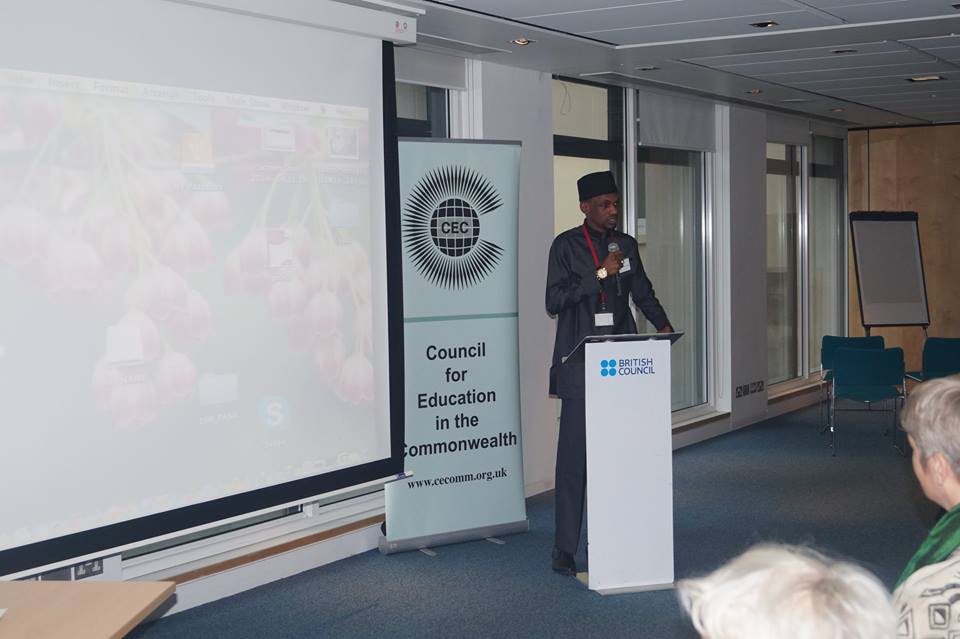
SPEECH BY THE PRESIDENT/CHAIRPERSON, COMMONWEALTH YOUTH COUNCIL, AHMED ADAMU, DURING THE ANNUAL CONFERENCE OF THE COUNCIL FOR EDUCATION IN THE COMMONWEALTH, HELD AT BRITISH COUNCIL HEADQUARTERS, 10 SPRING GARDENS, LONDON, ON TUESDAY, 2ND JUNE 2015


Title: Educational engagement and out of school youth in the Commonwealth: Unpacking educational inequalities


More than 60% of the Commonwealth population are made up of young people, who represent the hope and strength of the Commonwealth sustainability. The best way to prepare these young people is by giving them the deserved quality education. That is why the young people in the Commonwealth consider quality education as number priority as contained in the 2013 Hambantota Youth Declaration. By extension, education is the number one mandate of the Commonwealth Youth Council, being the official voice for the young people. The question we ask ourselves is how qualitative and accessible is the education.

According to UNESCO report, adolescents are more likely to be out of school than children, and there are more than 121 million children and adolescents across the world who never started school or dropped out, and this has caused concern about the future prosperity of the Commonwealth. It also costs a lot on these nations, for example in Nigeria, it was reported that the country loose equivalent to 15% of its GDP due to out of school population, whom would have added value to the economy if educated.

Because education is monetized, the issue of affordability becomes a concern, and that’s what underpins the large inequality between nations and individuals in terms of access to quality education. Even though, researches have shown that there is no absolute positive correlation between income status of a country and the level of its literacy as some poor countries that spend less per capita achieve high level of literacy. However, income status has remained huge cause of inequality among individuals.

Children of the rich have higher propensity of having access to quality education than the children of the poor. There is also inequality in terms of ethnic and cultural persuasions, though there was a tremendous change in perception about formal education in some strong cultural societies, there are still remnants of such indifferent attitude toward formal education in those society. Inequality between genders is the prominent one, as women are perceived as domestic properties rather than active participant in societal development.

The illusion that women's formal education is not important, as even if they went to the school, it is useless as they will eventually get married. That was the fundamental and wrong belief that causes gender inequality in educational system. Women require special provisions at educational environments, which often not provided. Female students feel more comfortable seeing a mixture of male and female teachers, or rather pure female teachers. However, there are fewer female teachers in some countries. These and so many other reasons cause the huge gaps between genders.
The women education is paramount, as we are taught that educating one woman is like educating the whole society. This is because women nurture all classes of people we have in society, and the best discipline and knowledge we receive comes from mothers, and that’s why girl’s education is very important.

Inequality as a result of disability; young people with special requirements are literally forced out of school because there are no provision to cater for their unique circumstances, and subsequently, they become hopeless and feel not part of the society. Researchers have found that people with disabilities if adequately provided with educational facilities can outperform regular students. There are also inequalities between rural and urban locations, as both teachers and students prefer to live in urban areas. However, in recent times as a result of over flooding the urban areas, educational supplies in these urban cities cannot meet up the demands. Therefore, unequal economic and social opportunities between rural and urban areas has caused the locational educational inequalities.

Because of the income disparities, there are children who are perceived to be in school but are actually out of schools. There are children who are forced to engage in labour activities to help the family earn a living, these could be through hard labour or street hawking. Parents are usually worried about what a child can eat at school or back at home. Some children are out of school because they do not have mobility to travel to the far distant and only available school. So, that is why societies loose great scientists, engineers, economist etc, and you cannot quantify the economic loss of losing these latent talents. Similarly, lack of quality education cause continuous violence and restiveness in society, which is another social cost of unequal access to education.

Education and poverty are therefore a vicious cycle; if you are not educated you are three times more likely to be poor, and when you are poor you are equally unlikely to be educated. Therefore, we have to ask ourselves to what extend should we monetise our educational system. Education is like the air we breathe, you need air to live, and you don’t pay for it. Equally education should be accessible for all and relatively affordable.

According to the Commonwealth Youth Development Index, educational outcomes are not wholly dependent on income of a nation (at country level). Poor nations can achieve high levels of education, and this is further evidenced by the fact that government spending and education do not correlate highly. For instance, Tonga (a Commonwealth country) achieves almost complete youth literacy whilst spending less than the United Kingdom. Therefore, size, income, location, and history of a country does not influence the quality and accessibility of its education systems.

What matters are the all-inclusive and robust educational policy, compliance and strong monitoring and evaluation systems. There should be a general and disaggregated educational indices that can be used to understand the context of the educational issues for policy priority and evaluation. If for example we have an index that say there are 1 million out of school young people in xx year, then these statistic should be monitored in years to come so that we can gauge to what extend our educational policy are impacting by now looking at the number of the out of school children. Poverty alleviation programmes can help improve access to education.

Education is not only about passage of knowledge, it is about communication, and it does not make sense to me to teach a child with a strange language. That is why primary and secondary schools should be taught in mother’s tongue or regular language in the community. Second languages like English, Arabic or French should be taught as a separate language study within the educational system. So that, children can learn to speak a common language for international and national interactions and for communication purpose. Targets and professionals goals should be set for every student, and should be coached toward achieving that particular goal. Student loans should be provided for those that want to further their education. Appreciation incentives should be provided to parents who send their kids to school regularly.

Teachers at primary and secondary schools should receive equal salary as those of polytechnic lecturers, so that best brains can be attracted to teach at the foundation levels. Countries that spend so much is sponsoring students abroad should save the money and build their local universities so that more people can access quality education within the country, rather than allowing it for the few lucky ones. Special training and courses can be sponsored abroad, but, it is an economic cost to keep sponsoring students abroad to study regular courses that can be offered locally. With the savings from reducing the foreign scholarships, government can train and hire more qualified teachers and provide the required facilities locally. Corruption in managing educational budget must be squarely addressed.

Finally, the importance of education cannot be over emphasized, as education correlate with life expectancy, wellbeing, gender equality and development. Therefore, I recommend demonetization of education. Instead of spending money on weapons for wars, and power competition, let’s put that money to the educational sector. We as citizen of the world, we must not live in isolation, we must be sensitive to other nations’ backwardness and help them prosper. Let us compete in knowledge and education, rather than competing in nuclear and wealth.

Thank you
Ahmed Adamu
President/Chairperson, Commonwealth Youth Council.

Tuesday, 2 June 2015

SPEECH BY THE PRESIDENT/CHAIRPERSON, COMMONWEALTH YOUTH COUNCIL, AHMED ADAMU, DURING THE ANNUAL CONFERENCE OF THE COUNCIL FOR EDUCATION IN THE COMMONWEALTH, HELD AT BRITISH HOUSE HEADQUARTERS, 10 SPRING GARDENS, LONDON, ON TUESDAY, 2ND JUNE 2015


Title: Educational engagement and out of school youth in the Commonwealth: Unpacking educational inequalities

More than 60% of the Commonwealth population are made up of young people, who represent the hope and strength of the Commonwealth sustainability. The best way to prepare these young people is by giving them the deserved quality education. That is why the young people in the Commonwealth consider quality education as number priority as contained in the 2013 Hambantota Youth Declaration. By extension, education is the number one mandate of the Commonwealth Youth Council, being the official voice for the young people. The question we ask ourselves is how qualitative and accessible is the education.

According to UNESCO report, adolescents are more likely to be out of school than children, and there are more than 121 million children and adolescents across the world who never started school or dropped out, and this has caused concern about the future prosperity of the Commonwealth. It also costs a lot on these nations, for example in Nigeria, it was reported that the country loose equivalent to 15% of its GDP due to out of school population, whom would have added value to the economy if educated.

Because education is monetized, the issue of affordability becomes a concern, and that’s what underpins the large inequality between nations and individuals in terms of access to quality education. Even though, researches have shown that there is no absolute positive correlation between income status of a country and the level of its literacy as some poor countries that spend less per capita achieve high level of literacy. However, income status has remained huge cause of inequality among individuals.

Children of the rich have higher propensity of having access to quality education than the children of the poor. There is also inequality in terms of ethnic and cultural persuasions, though there was a tremendous change in perception about formal education in some strong cultural societies, there are still remnants of such indifferent attitude toward formal education in those society. Inequality between genders is the prominent one, as women are perceived as domestic properties rather than active participant in societal development.

The illusion that women’s formal education is not important, as even if they went to the school, it is useless as they will eventually get married. That was the fundamental and wrong belief that causes gender inequality in educational system. Women require special provisions at educational environments, which often not provided. Female students feel more comfortable seeing a mixture of male and female teachers, or rather pure female teachers. However, there are fewer female teachers in some countries. These and so many other reasons cause the huge gaps between genders.

The women education is paramount, as we are taught that educating one woman is like educating the whole society. This is because women nurture all classes of people we have in society, and the best discipline and knowledge we receive comes from mothers, and that’s why girl’s education is very important.

Inequality as a result of disability; young people with special requirements are literally forced out of school because there are no provision to cater for their unique circumstances, and subsequently, they become hopeless and feel not part of the society. Researchers have found that people with disabilities if adequately provided with educational facilities can outperform regular students. There are also inequalities between rural and urban locations, as both teachers and students prefer to live in urban areas. However, in recent times as a result of over flooding the urban areas, educational supplies in these urban cities cannot meet up the demands. Therefore, unequal economic and social opportunities between rural and urban areas has caused the locational educational inequalities.

Because of the income disparities, there are children who are perceived to be in school but are actually out of schools. There are children who are forced to engage in labour activities to help the family earn a living, these could be through hard labour or street hawking. Parents are usually worried about what a child can eat at school or back at home. Some children are out of school because they do not have mobility to travel to the far distant and only available school. So, that is why societies loose great scientists, engineers, economist etc, and you cannot quantify the economic loss of losing these latent talents. Similarly, lack of quality education cause continuous violence and restiveness in society, which is another social cost of unequal access to education.

Education and poverty are therefore a vicious cycle; if you are not educated you are three times more likely to be poor, and when you are poor you are equally unlikely to be educated. Therefore, we have to ask ourselves to what extend should we monetise our educational system. Education is like the air we breathe, you need air to live, and you don’t pay for it. Equally education should be accessible for all and relatively affordable.

According to the Commonwealth Youth Development Index, educational outcomes are not wholly dependent on income of a nation (at country level). Poor nations can achieve high levels of education, and this is further evidenced by the fact that government spending and education do not correlate highly. For instance, Tonga (a Commonwealth country) achieves almost complete youth literacy whilst spending less than the United Kingdom. Therefore, size, income, location, and history of a country does not influence the quality and accessibility of its education systems.

What matters are the all-inclusive and robust educational policy, compliance and strong monitoring and evaluation systems. There should be a general and disaggregated educational indices that can be used to understand the context of the educational issues for policy priority and evaluation. If for example we have an index that say there are 1 million out of school young people in xx year, then these statistic should be monitored in years to come so that we can gauge to what extend our educational policy are impacting by now looking at the number of the out of school children. Poverty alleviation programmes can help improve access to education.

Education is not only about passage of knowledge, it is about communication, and it does not make sense to me to teach a child with a strange language. That is why primary and secondary schools should be taught in mother’s tongue or regular language in the community. Second languages like English, Arabic or French should be taught as a separate language study within the educational system. So that, children can learn to speak a common language for international and national interactions and for communication purpose. Targets and professionals goals should be set for every student, and should be coached toward achieving that particular goal. Student loans should be provided for those that want to further their education. Appreciation incentives should be provided to parents who send their kids to school regularly.

Teachers at primary and secondary schools should receive equal salary as those of polytechnic lecturers, so that best brains can be attracted to teach at the foundation levels. Countries that spend so much is sponsoring students abroad should save the money and build their local universities so that more people can access quality education within the country, rather than allowing it for the few lucky ones. Special training and courses can be sponsored abroad, but, it is an economic cost to keep sponsoring students abroad to study regular courses that can be offered locally. With the savings from reducing the foreign scholarships, government can train and hire more qualified teachers and provide the required facilities locally. Corruption in managing educational budget must be squarely addressed.

Finally, the importance of education cannot be over emphasized, as education correlate with life expectancy, wellbeing, gender equality and development. Therefore, I recommend demonetization of education. Instead of spending money on weapons for wars, and power competition, let’s put that money to the educational sector. We as citizen of the world, we must not live in isolation, we must be sensitive to other nations’ backwardness and help them prosper. Let us compete in knowledge and education, rather than competing in nuclear and wealth.


Thank you


Ahmed Adamu
President/Chairperson, Commonwealth Youth Council.

Monday, 1 June 2015

BUHARI SHOULD PROFESSIONALISE SMALL SKILLED LABOUR


By Dr. Ahmed Adamu

More than 40% of the unemployed and underemployed in Nigeria engage in small-skilled labour or what some termed as unskilled or hard labour, and these people are potentially vulnerable to abuse, exploitation, discriminations, and seldom used to perpetuate crimes. Heroes are also those young people who reject the myth of their generation apathy, and endured all the hardships to earn their living legally. Refusing to take shortcuts, and remain contented with their little income. When I look at these brave young people, I do not only see bricklayers, labourers, plumbers, electricians, commercial motorcyclists, security guards, pushers of wheelbarrow, local toilet plushers etc. what I see are nation builders, service providers, highly-skilled labourers and movers of the economy. Some might consider them as unskilled or semi-skilled labourers, but the nation will realise how inelastic their services are, when these groups of small-skilled labourers organise themselves and go for a month strike; then we will realise that we cannot build the houses we live in, we can’t fix electric issues in our houses, we can’t push our loads in the parks or market places, and we can’t do the hard labour in other construction works. Then the whole country will stand still. That is the least you can imagine how important these small-skilled labourers are.

Imagine a young man spending thirty years doing hard labour, many times underpaid and exploited, and yet endured. This same young man will build tenths of houses, offices and roads, and when he gets old and no longer having the strength to do these jobs, he gets nothing to feed himself and his family, and he will eventually resort to begging to sustain his life. His greatest asset, his strength, is exhausted. Why can’t he receives pension allowances in appreciation for his service to the nation? I think some of these young men deserve better pension scheme and wage package than some of the negligent government workers and politicians.

In some developed countries, small-skilled labourers earn high, as their services are appreciated and recognised. For example, in UK, the wage for every handyman is regulated and standardised according to locations; A bricklayer gets around N100 per brick laid, and Handyman doing odd jobs gets N5,600 per hour, gas heating boiler services for N16,800 etc. These are regulated for London location, and therefore clients cannot cheat or exploit their service providers, and vice versa. This also helps in predicting cost of production. This are usually reviewed timely to accommodate market changes. By regulating and standardising small-skilled jobs, unemployed young graduates will then start estimating how much they would be losing for every one hour lost doing nothing. They would then realise that, they only need a particular skill to earn certain amount of money in one hour or per load of work/service. This will attract young people to learn skills despite the chunks of their educational certificates.

Therefore, regulating and standardising the wages for small skilled labourers as well as creation of their unique health and pension scheme will motivate young people to engage in skills acquisitions. These hard labour or small-skilled jobs should be professionalised, someone who spent three years working as a plumber or electrician should be considered as having a professional work experience for three years. He can add that to his CV. They should be encouraged to set up an organisation, which will register all members engaged in these types of jobs. Their organisation will be protecting and advocating for their interests, and will provide frequent trainings and ensure improvement of quality of their work/services. Their organisation will receive certain incentives to subsidise their work and to help reduce charge rate. These incentives will be shared among its members. The government will set requirements for every small-skilled workers association, which might include, significance, charge rate, quality of work, decency of the workers, compliance to standard and regulations etc.

If young people engaged in these small-skilled jobs are recognised as professionals and receive attractive wages, the percentage of youth unemployed will be reduced by at least 20%. Therefore, in an effort to reduce unemployment and poverty, small-skilled labour should be professionalised. Educational institutional curriculum should also provide wide range of vocational and technical skills, so that young graduates may not have to learn these skills after their education, they can automatically start providing services immediately after their studies, and they do not have to wait for government jobs.

Thank you

Ahmed Adamu
Economist

Tuesday, 26 May 2015

Dr. Ahmed Adamu met with the Queen of England on many occassions: Photos


From the pictures above, Dr. Ahmed Adamu met with Her Majesty the Queen of England, first during the Queen's Young Leaders award at the Queen's Palace, and during the Commonwealth Day receptions for the 2014 and 2015.

Monday, 25 May 2015

Nigerian petroleum sector; Way out-


By Dr. Ahmed Adamu

Nigeria is the 12th largest crude oil producer in the world, contributing about 3% of the global crude oil production, and making it the largest crude oil producer in Africa. It is also the ninth country in terms of gas reserves in the world, making it having the largest gas reserves in Africa, contributing about 8% of the global liquefied natural gas supply. However, it is ranked 185th country in terms of electricity per capita, with one Nigerian having an average access to electricity of 149kWh (averagely 3 hours of electricity per day depending on the appliances and manner of usage). Despite its crude oil reserves profile and its installed refining capacity of 445, 000 barrels per day, yet 70% of its domestic petroleum products demands are met through petroleum importation. This cost the country around $62 billion in 2014, the amount that is sufficient to meet the initial investment requirement to build four refinery plants, each with operating capacity as the combined capacities of the existing dilapidating refineries in the country. This amount is also higher than what the country received (averagely around $56 billion) from crude oil exports in the same year.

As at 2014, Nigeria imported 886 million barrels of petroleum products, making it the 13th largest petroleum importer in the world. For each barrel of petrol imported, Nigeria government paid at least $8 per barrel, which tallied the total fuel subsidy payment to about $7 billion in 2014. These elephant figures sound outrageous to so many developing countries that would wish they had that much, they could have used it much better. The wealth competition between nations is partly motivated to improve wellbeing and development of citizens, but in Nigeria, its oil and gas resources has caused more harms than benefits. As I write this, hundreds are on fuel queues ready to pay at any price level at least if they can see fuel. Millions lack access to potable water, and talk less of electricity I have earlier explained. The corruption and mismanagement of petroleum funds are responsible for these plights, and it appears obvious that Nigeria cannot afford to continue with the petroleum subsidy.

It is only when the crude oil price is at any price below $40 that the Nigerian government will not pay for subsidy, and because Nigeria is exposed to petroleum price volatilities and market uncertainties, petroleum subsidy can never be sustainable. With the increasing demand for petroleum products signalling more subsidy payments, such cannot be feasible as the expectation on the government is at the highest level ever. The pending austerity measure will have to scrap all subsidy payments. However, with immediate effect, savings from absolute subsidy removal has to be invested in reviving and building sufficient refining capacity required to meet the average 33 million barrels petrol demand in the country, so that petrol market price per litre can still be within the usual affordable price range within the country without being subsidised. If subsidy is removed without corresponding sufficient refining capacities, then Nigerians should be ready to pay on average N200 per litre, and even more depending on the market fluctuations.

With Shale oil and gas discoveries, Nigerian oil and gas may no longer be as favourable as before, which means decline in revenue resulting from decline in crude oil price. This will also means that the government will not have sufficient income to meet up with the skyrocketing subsidy payments. Thank God, this year there is no provision for fuel subsidy. The only feasible option is to refine enough of what we require and utilise other petroleum reserves domestically to meet residential, commercial, industrial and transport sector demands. Thereby propelling the economy, boost export baskets and maintain a reasonable level of export earnings.

Though, Nigerian existing oil reserves will finish in 2068 (at the current level of production and reserves), we have to start thinking about alternatives and new discoveries. Natural gas reserves are 90 times more than oil reserves in the country, but the required infrastructure to make the natural gas useful are not there; hence, it is flared to the air, making the country second worst country in terms of gas flaring in the world. If more gas infrastructures are put in place and the gas-power turbines (including the new ones) are supplied with sufficient gas feeds, then electricity access will increase, jobs will be created, cost of production will reduce, wellbeing will increase, and the economy thrives. Energy diversification, operational refineries, and adequate supply of gas to power turbines will help revive industries and cure the country from Dutch disease. This will entice investors to come and invest in the country, as the cost of productions is cheaper and Naira currency is cheaper (courtesy of recent devaluation of the currency). However, with the continues flowing of foreign investment in the country, demand for Naira will increase, and Nigerian foreign reserves will increase, and the value of Naira will eventually appreciate and normalise.

As we prepare for a new Nigeria in couple of days, we have to be extra cautious and decisive about important decisions especially those relate to the petroleum and energy sector. Nigerians must be ready to adapt to some difficult times for some little time, and wait to benefit from the resulting effects of these difficult decisions. All refineries must start operating at least above 70% operating capacities (currently operating at 16%), new ones must be built, subsidy must be totally removed, industrial sector must be bailed out, and economy diversified.

Ahmed Adamu
Petroleum Economist

Tuesday, 19 May 2015

President Buhari should tax the rich more and raise minimum wage


There have been misconception that giving tax incentives to the rich help incentivise job creation, because the capitalists are perceived to be job creators. The truth is, they do not. Ordinary consumer is more of a job creator than a capitalist. Business people taking credit for creating jobs is highly unfair. Business people hire people as their last resort, as they only hire to keep pace with the consumer demand. The Nigerian Personal Income Tax act is unfair for allowing fixed tax rate for resident companies, while varying that of personal income tax rates. The rigidity of the resident company tax rate allows for unnecessary overgrowing of few companies and making many more to close down. Small, medium and big companies pay 30% of their profits as tax irrespective of their return and size.

Consequently, rich are getting richer and more citizens that are of middle class were relegated. Statistics have shown that, we have more unemployment as number of millionaires increases over time. If number of millionaires can create jobs, we will not have the level of unemployment we are having now in the country, which is of a record high (23.9%), this without including the estimated 30% more that are under-employed. The individual consumer needs to be incentivised. If the minimum wage is to keep pace with the inflation rate, the minimum wage would have been anything above N25, 000 by now just within five years since it was reviewed to N18, 000. Jobs are consequence of eco-systemic feedback loop between customers and businesses. If the middle class thrive and do well, both the capitalist and the poor benefit.

Therefore, let the rich be taxed more, so that we can create more middle class people, who consumes more and then create jobs by virtue of their consumptions. Company tax system should be proportionate to the income level. Business with profit less than N80 million should be taxed at 25%, business profits above N80 million but not up to N500 million should be taxed at 30%, and any profit margin above N500 million should be taxed at 35%. This should not include companies operating in the petroleum sector. There should not be credit breaks for big companies, unless for special circumstances. However, tax breaks can be allowed for small and medium companies. Minimum wage should be upgraded to N25,000.

With the pending austerity measures, government expenditure (recurrent) must be reduced by at least 10% every year for four years, the tax rates should be increased and compliance enforced. Compliance will not be a big deal because people now have trust and confidence on the government. However, there should be immediate reflection of benefits derived from tax payments. This should be showcased in areas like improving access to electricity, increasing the minimum wage, improving access to quality and affordable health care and educational system. All leakages of government revenue resulting from corruption should be blocked and channelled that to power sector at least in the short term.

Sunday, 10 May 2015

Youth For 30%

By Dr. Ahmed Adamu

If 60% of the Nigerian population can ask for only 30% level of inclusion, then they must be given, because that is too small to ask given their sacrifices toward sustaining the constitutional democracy and economic development. Youth in Nigeria made up of at least 60% of the labour force and constitute majority of the eligible voters, with whose votes, leaders emerge.

Looking back at the role young people played in the country’s leadership since independence, many believe that the current youth generation are short-changed, as the old generation keep recycling themselves in the same leadership positions they occupied when they were young.

Tafawa Balewa became Prime Minister at the age of 48, Aguiyi Ironsi 42, Yakubu Gowon 32, Murtala Muhammad 37, Olusegun Obasanjo 38, , Shehu Musa Yar’adua 32, Shehu Shagari 54, Muhammadu Buhari 41 , IBB 44, Sani Abatch 50 etc. The cabinet minsters in their regimes were largely made up of youth below the age of 35. We had a minister of petroleum at the age of 26. There were young people who were then very active in moving this country who are numerous to mention here.

Looking beyond the shores of the country, we had the following young leaders with their ages when the become leaders:

Jean-Claude Duvalier, President of Haiti, 19 years of age.
Valentine Strasser, President of Sierra Leone, 25 Years of age
Dogsomyn Bodoo, Prime Minister of Mongolia, 26 Years of age
Michel Micombero, President of Burundi, 26 Years of age
Maria Lea Pedini-Angelini, Captain Regent of San Marino, 26 Years of age
Amet Zogu, Prime Minister of Albania, 27 Years of age
Muammar Gaddafi, Guide of the Revolution, 27 Years of age
Gloriana Ranocchini, Captain Regent of San Marino, 27 Years of age
Giovanni Lonfernini, Captain Regent of San Marino, 27 Years of age
Abdessalam Jalloud, Prime Minister of Libya, 27 Years of age
Andrea Zafferani, Captain Regent of San Marino, 27 Years of age
Maktoum bin Rashid Al Maktoum, Prime Minister of the United Arab Emirates, 28 Years of age
Mario Frick, Prime Minister of Liechtenstein, 28 Years of age
Kim Jong-Un, Supreme Leader of North Korea, 28 Years of age
Giuliano Gozi, Captain Regent of San Marino, 28 years of age
Ieremia Tabai, President of Kiribati, 28 Years of age
Samuel Doe, President of Liberia, 28 Years of age
Jamtsangiyn Damdinsüren, Chairman of the Presidium of Mongolia, 2 Years of age
Lhendup Dorji, Prime Minister of Bhutan, 29 Years of age
Muhammad Ali Haitham,Prime Minister of South Yemen, 29 Years of age
Milo Đukanović, Prime Minister of Montenegro, 29 Years of age
Yahya Jammeh, President of the Gambia, 29 Years of age
Souley Abdoulaye, Prime Minister of Niger, 29 Years of age
Roque González Garza, President of Mexico, 29 years of age
Gnassingbé Eyadéma, President of Togo, 29 years of age 
Branko Crvenkovski, Prime Minister of Macedonia, 29 years of age 
Joseph Kabila, President of the Democratic Republic of the Congo, 29 years of age 
David Dacko, President of the Central African Republic, 30 years of age 
Jean-Baptiste Bagaza, President of Burundi, 30 years of age
Bernard Dowiyogo, President of Nauru, 30 years of age
Ilir Meta, Prime Minister of Albania, 30 years of age 
Sadiq al-Mahdi, Prime Minister of Sudan, 30 years of age 
Marien Ngouabi, President of the Republic of the Congo, 30 years of age 
Pandeli Majko, Prime Minister of Albania, 30 years of age

If these young people can lead their countries, it means young people are still capable and should be given space to contribute in nation building. 
The Nigerian constitution has limited youth participation in governance, where it says a person must be 30 years of age before he/she can become a cabinet minister or member of federal House of Representatives, which means 71% of young people in the country cannot become a cabinet minister even if they are qualified by virtue of experience and qualification. The same constitution says, no young person (as defined in Nigerian youth policy) can become senator or a governor or president. Therefore, the constitution should be reviewed to accommodate more space for young people.

Finally, Nigerian youth should rise and demand for inclusion in governance at all levels, as there is nothing for them without them. They should take charge, not only in voting but in governance. Their voices can only be heard if their representatives sit on the table to decide on issues that affect you. The 30% affirmative action for youth participation is non-negotiable. This movement/campaign should be visible and strengthen at every state. Let us get united and pursue 30% level of participation. This movement is not about one person, or personal interest, it is about protecting and empowering the youth.

Ahmed Adamu

Saturday, 2 May 2015

Review Nigeria’s youth policy: Commonwealth youth council tells Buhari


The chairperson of the Commonwealth Youth Council, Ahmed Adamu, has urged Nigeria’s president elect, Muhammadu Buhari to review the country’s youth policy as well as initiate youth development targeted at improving the lives of the Nigerian youth

Adamu who stated this while addressing a group of Nigerian youths upon his arrival at Abuja on Thursday said youth development targets and indicators must be set out by the incoming administration and updated regularly, while stressing the need for proper youth participation in youth affairs.

“The ministry of youth must be placed in a position to mainstream all youth development programmes and projects. Government ministries, departments and agencies working in developing youth agenda must do so in partnership and collaboration with the ministry of youth. There should be a consolidated youth development funds that will help in developing youth capacities and entrepreneurial skills. The Nigerian youth policy must be reviewed and implemented to the later. There should be a youth development centre” he said.

He added that the Nigerian youth must take our rightful positions in governance.

“We call on the Nigerian President-Elect to ensure 30% affirmative action for youth participation in governance at all levels. This is a non-negotiable option. We specifically call for appointment of a young person below the age of 35 as youth minister. This is in line with the definition of youth as enshrined in the Nigerian youth policy.

“The second criteria is that whoever is going to be nominated as youth minister must be a youth leader, who has contact with the youth and is familiar with their challenges. The youth minister’s position must be purely based on qualification and relevant experience, and politics should not influence the choice.

“We are now watching the President-elect, and for every action he makes, we will make sure that the interest of young people are protected and represented” he said.

Adamu however promise to give unyielding support toward the success of Mr. Buhari’s administration.

“We, the youth voted for this new administration and we will make sure it succeeds. Youth issues must be squarely addressed. These range from youth unemployment to low quality education”.

Adamu said he is in Nigeria to felicitate with “my brothers and sisters over the peaceful and credible elections, and to congratulate the president-elect for the victory. The Commonwealth Youth Council (CYC) led the Nigerian youth in a non-violence election campaign, and as a result, the Nigerian youth were determined to shun any sort of violence. Therefore, this is a victory to the youth. The young people endured all the hardships to ensure that their voices were heard in this election. This is a great triumph for the young people”.

He also informed that CYC is undertaking some youth development projects across the 53 Commonwealth nations, and within the remaining period of his tenure, he will bring so many other youth development projects to benefit the young people around the world.